• Home
  • About me
  • Recipes
  • Contact
Menu

the verdigris

Street Address
City, State, Zip
Phone Number
eat.drink.dig.make.grow.play

Your Custom Text Here

the verdigris

  • Home
  • About me
  • Recipes
  • Contact

mini beef wellingtons step-by-step: puff pastry

December 15, 2014 Stephanie Inman

The issue of what to have for christmas dinner (or the non-christmas winter holiday dinner of your choice) is controversial. As much as I enjoy turkey, it seems like the wrong option to me. Many people (me included) have just eaten a turkey for thanksgiving, the only other turkey they are likely to eat all year. Having another one so soon makes no sense to me. If you had american thanksgiving, you just had a turkey at the end of November! We have foolishly cornered nearly all of our collective turkey consumption into a tiny window of the year.  I advocate for variety in our winter gluttony-based festivals. 

My family has been having beef wellington for christmas dinner for a few years, and, from the very first time we had it, I felt that it was a superior holiday entree option. It is meat, wrapped in another meat, wrapped in pastry-I think it's wise to take every opportunity to eat tasty food wrapped in other tasty foods. 

Beef wellington is a little complicated to make; there are a lot of steps and it can be a bit intimidating. However, a few steps can be done in advance, which makes the assembly easier on the day.  The pastry can be made several days in advance and stored in the fridge or made even further in advance and frozen. Or it can be purchased! Puff pastry is really fun to make (I think so anyway) but store bought is still really good, especially if you can buy  all butter puff pastry. Feel free to skip this whole step if you aren't inclined to make puff pastry at home. I have broken the recipe down into several posts to this isn't a monstrously long post and the next steps are coming soon!

I made four individual portions of beef wellington, which only used halve of the puff pastry this recipe makes. Freeze the other half for another use, or double the rest of the recipes for eight portions. 

puff pastry: 

adapted from foodbeam

wet dough: 

  • 150ml water
  • a big pinch flaky salt 
  • 350g flour
  • 110g butter, melted and cooled

In the bowl of a stand mixer, mix flour, salt and butter until they are just combined. Using a low speed, slowly add water, only adding enough to bring the dough together without making it sticky. Turn the dough out onto plastic wrap and press into a large rectangle with the palm of your hand. Refrigerate, tightly wrapped in cling wrap. 

butter dough: 

  • 375g butter
  • 150g flour

Cream the butter on a high speed in a stand mixer for two minutes. Add the flour and mix quickly until just combined. Press into a rectangle on plastic wrap, the same size as the wet dough. Wrap tightly and refrigerate both doughs for at least two hours. 

On a lightly floured surface, roll the wet dough out to twice its original length. Place the butter dough onto one half of the rolled out wet dough, as in the photo below. Fold the wet dough over the butter block and tuck the edges in around the sides so no more of the butter block shows. Roll out this layered block twice as long again. 
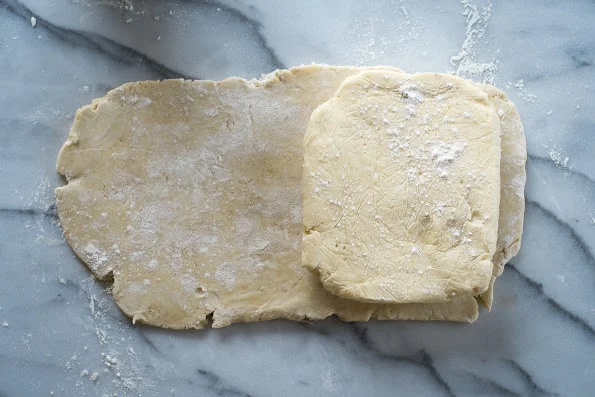
Fold the outside edges into the center of the rectangle. 
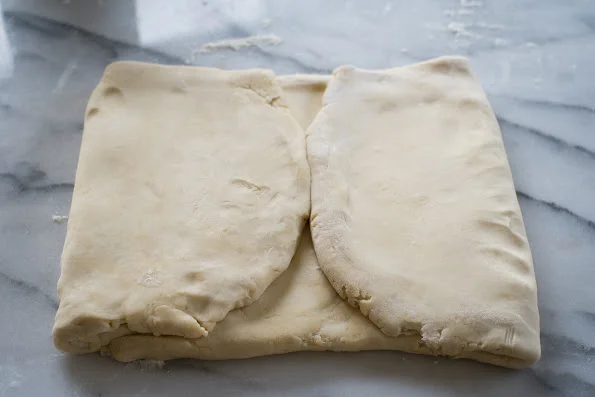
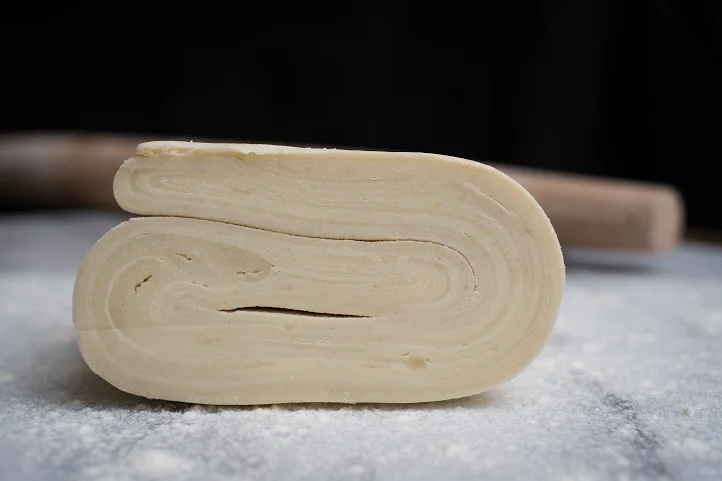
Fold toward the center again. Your dough should look like the picture below. Refrigerate for at least two hours. 
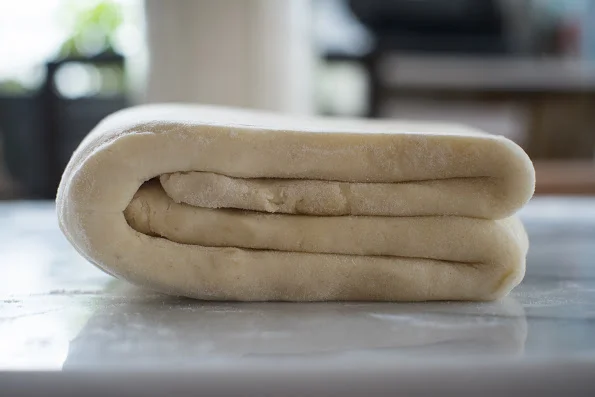
Roll dough out again and repeat the fold and roll process two more times. The dough is ready! Store in the fridge, tightly wrapped in plastic wrap, or in the freezer if you will be keeping it for longer than a few days. 
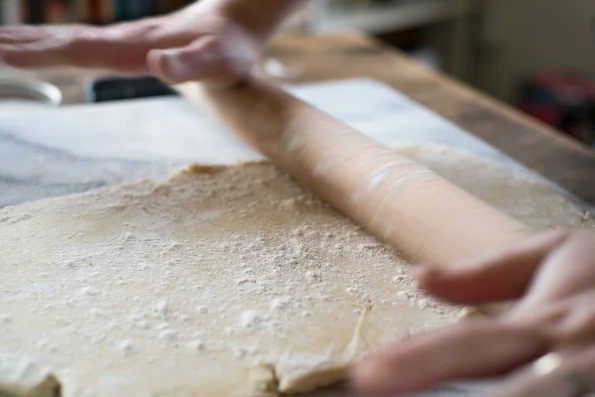
Photo credits: Tyrel Hiebert

Comment

cream of mushroom soup

November 15, 2014 Stephanie Inman

I was an alarmingly picky child, also an alarmingly picky teenager and an alarmingly picky young adult. Many foods were frightening to me, especially those with a slimy or slippery texture. Eggplant, onion, zucchini and mushrooms were particularly intimidating. Mushrooms most of all; they were squishy and slippery and they freaked me out. The mushroom aversion was also one that persisted as I managed to grow out of some of my other food fears. Even as I started to eat onions and eggplants, my mushroom dislike just dug in its heels. I knew logically that mushrooms tasted good, from when I tried them inadvertently and from the way people talked about them, I knew they had a meaty, rich, umami lovely flavour. I wanted to like them, but I just didn't. So squishy. 

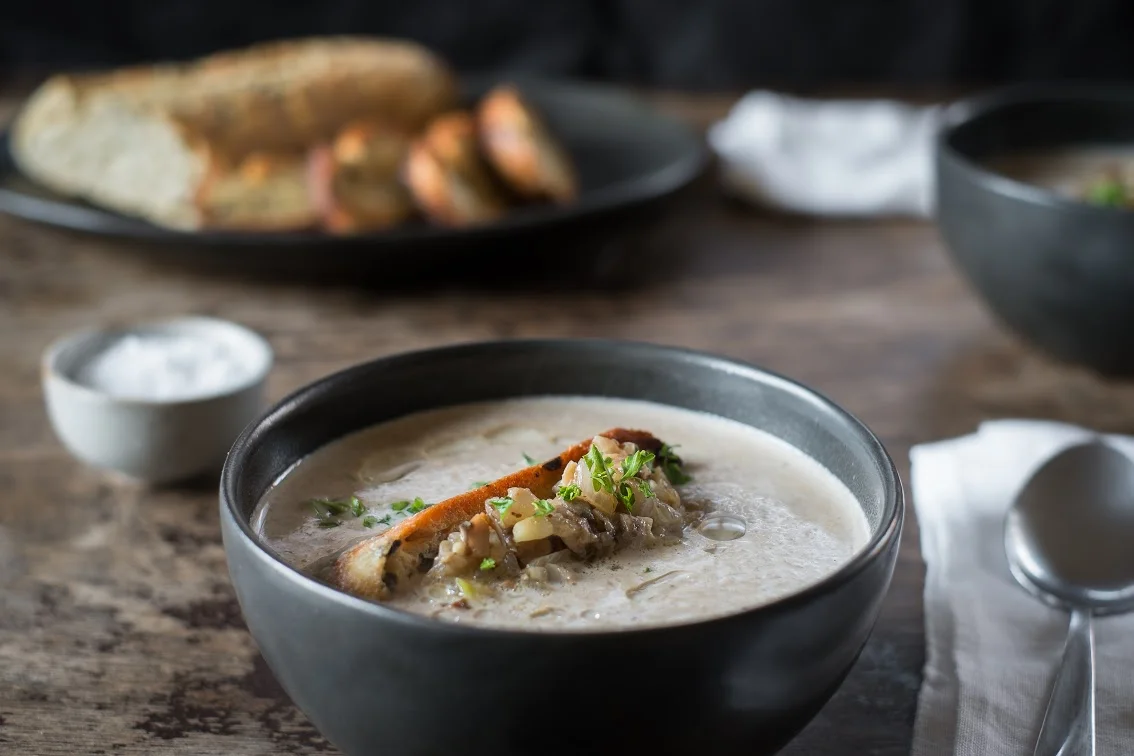
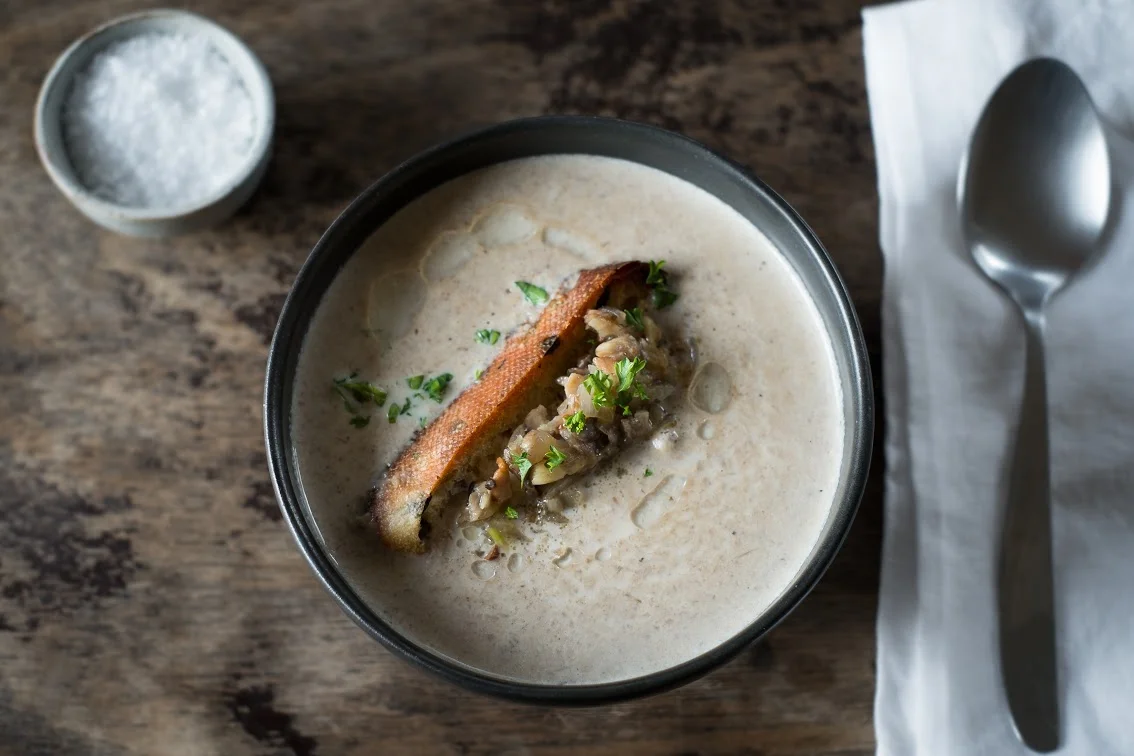
This soup was the gap-bridger, the recipe that let me start to really love mushrooms. This soup is the mushroom gateway drug. It sold me on mushrooms so thoroughly that I was able to start trying them in other non soup applications. And they were great! I'm sure you guys probably already know that mushrooms are great, if you weren't all so pathologically picky. But they are great, and so's this soup. 

cream of mushroom soup: 

  • 1 large yellow onion, roughly chopped
  • 1 whole head garlic, peeled and smashed
  • 4 cups beef, vegetable or mushroom stock
  • 4 cup mixed mushrooms, chopped. I used chanterelles, crimini and shiitake
  • 1 cup light cream
  • salt and pepper
  • 1/2 bunch parsley, roughly chopped (optional) 
  • a teeny splash of truffle oil (optional) 

Sauté onion and garlic in oil over medium heat until they are beginning to colour.  Add mushrooms, stirring occasionally. Sprinkle a little salt over them to help them release water. Continue to cook them until the water is mostly evaporated. Add stock and cook over medium heat for around half an hour to concentrate the stock slightly. Add the cream and season with salt and pepper. 

To cream the soup, either use an immersion blender and purée until the consistency you want is achieved (I like to blend until the soup is mostly smooth with some chunkier mushroom pieces are left) or blend in a blender. Stir through most of the parsley, if using, and reserve a little to sprinkle over the top. 

 Serve with parsley, and a couple drops of  truffle oil drizzled over each bowl if you wish. A few toasted slices of baguette would be pretty great too.  

Photo credits: Tyrel Hiebert
Comment

apple & hazelnut financiers

November 7, 2014 Stephanie Inman

Since the time change last weekend for daylight savings, the fallness of fall has hit me hard. It's dark before I leave work everyday and it makes me  feel like I should already be in bed. It has made the idea of hibernating very appealing. 

One of my favorite TV shows, QI, once featured the excellent gem of trivia that French peasants used to practice a sort of hibernation. The indomitable Stephen Fry explained that French peasants used to sleep through much of the winter, occasionally emerging from their slumber to eat a biscuit and then go back to sleep. This was and is hugely appealing to me. It makes sense, in the winter when there is less work to do, and less daylight to do it in, to just curl up and wait out the cold and dark. I'm sure some poor soul had to get up regularly and feed the cows, but generally people slept away large portions of the winter. According to this great New York Times article, the practice wasn't limited to France; it was practiced in other regions with long cold winters. Of course, technically these people didn't really hibernate. Their metabolisms and physiology most likely didn't radically alter in the same way that hibernating animals' bodies do. Humans can't just pack on body fat and then live on that fat for long periods they way some animals can. Sadly.

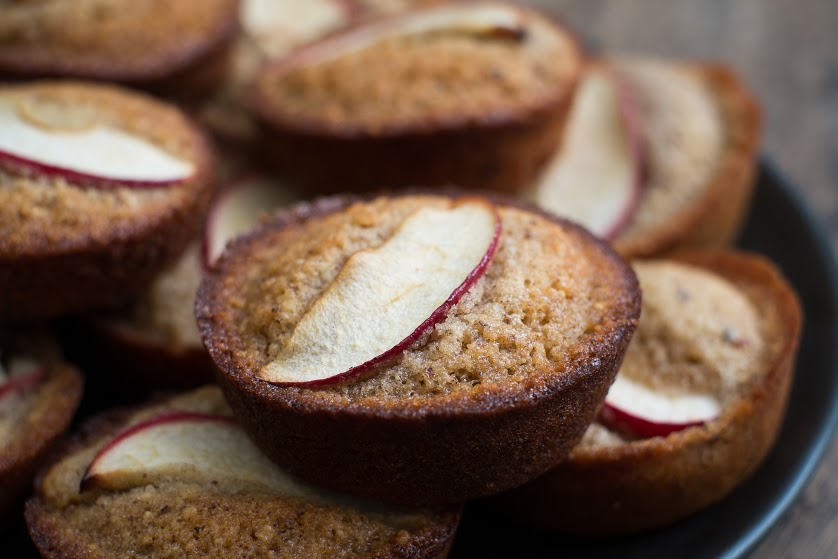
If you are looking to replicate this lifestyle as winter comes as I am, I would highly recommend the apple & hazelnut financier as a biscuit of choice to occasionally break your hibernation fast. Toasty, buttery and thoroughly cold weather appropriate, they might be a little more luxurious than the biscuits available to the 19th century peasantry, but they are tasty enough to trump historical authenticity.   Unfortunately, I think that several factors have conspired against my ever really realizing this fantasy, electric lights that let us toil away after sunset and the annoying need to work through the winter to pay rent among them. But I can still have some little cakes. 

apple & hazelnut financiers: 

adapted from cannelle et vanille

  • 120 grams egg whites 
  • 125 grams sugar
  • 55 grams white rice flour or all purpose flour 
  • 25 grams almond meal
  • 30 grams hazelnuts, toasted and ground into meal
  • 1 tsp vanilla
  • 150 grams butter, melted and cooled (browning the butter will add extra nuttiness!) 
  • 1 apple, very thinly sliced


Combine sugar, flour, nut meals and vanilla in a mixing bowl. Add egg whites and stir to combine. Stir in butter, cover bowl with plastic wrap and age in the fridge overnight. 

Generously grease financier tins or muffin tins. Fill with batter; only about 1/2 inch high if you are using muffin tins, up to the brim if you are using financier tins. Place one apple slice a little on top of each financier. 

Bake at 375 for about ten minutes, until the centres are set and the edges are browned. Cool and then run a knife around the edge of the tins and gently remove the financiers. Enjoy these financiers snuggled down under a quilt, and Rip Van Winkle yourself until the spring. 

Photo credits: Tyrel Hiebert 
Comment

"cheater's" ricotta salata

October 20, 2014 Stephanie Inman

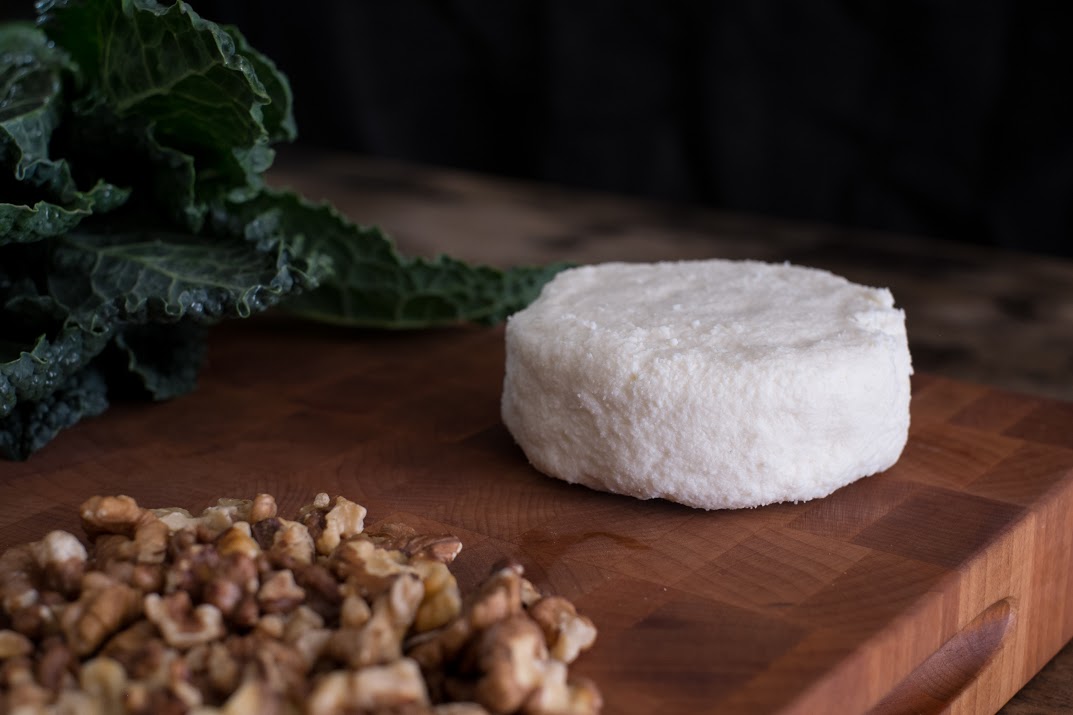
Ricotta salata is salted, pressed and dried ricotta. It’s really tasty, a bit like feta, but it can be tricky to find in grocery stores, so I like to make it myself. I started thinking of this recipe as “cheater's” ricotta salata because I most often use store-bought ricotta when I make it-it’s a really simple process, all you need is ricotta, salt and time. 

 I have seen a lot of recipes titled "Cheater's (whatever)" or "Lazy (insert food here)". These things seem to often involve opening a box of cake mix, a packet of pudding, a roll of premade pastry, something from a tin... some kind of store bought shortcut.

There seem to be different levels of what counts as cheating. Is it cheating if you use store bought pastry? If you used a pack of cake mix? If you didn't grow and mill your own flour? There is a growing fixation with making food harder to make. I suspect this is in response to  increasing convenience; by making food really hard work and fetishizing the increasing levels of DIY production we can be rebels against mass production.

In reality, it is a huge luxury to be able to care about things like making your own pasta, making your own puff pastry, making your own cheese. That's why I don't really like the idea that some ways of preparing food are "cheating" - it elevates this luxury of preparing from-scratch, time consuming recipes to a higher moral plane.

I love to cook and to prepare food from scratch, because I find it enjoyable and interesting, not because it carries some inherent goodness. I think it would be great if we could try to stop talking about food like it’s “cheating” or that some food is “real” or “fake” or "clean".  

cheater's ricotta salata:

  • one tub ricotta, homemade or store bought, of the highest quality you can find

  • large supply of fine, flaky salt, I like Diamond Crystal salt

In a small bowl, mix 2 tsp salt through the ricotta.

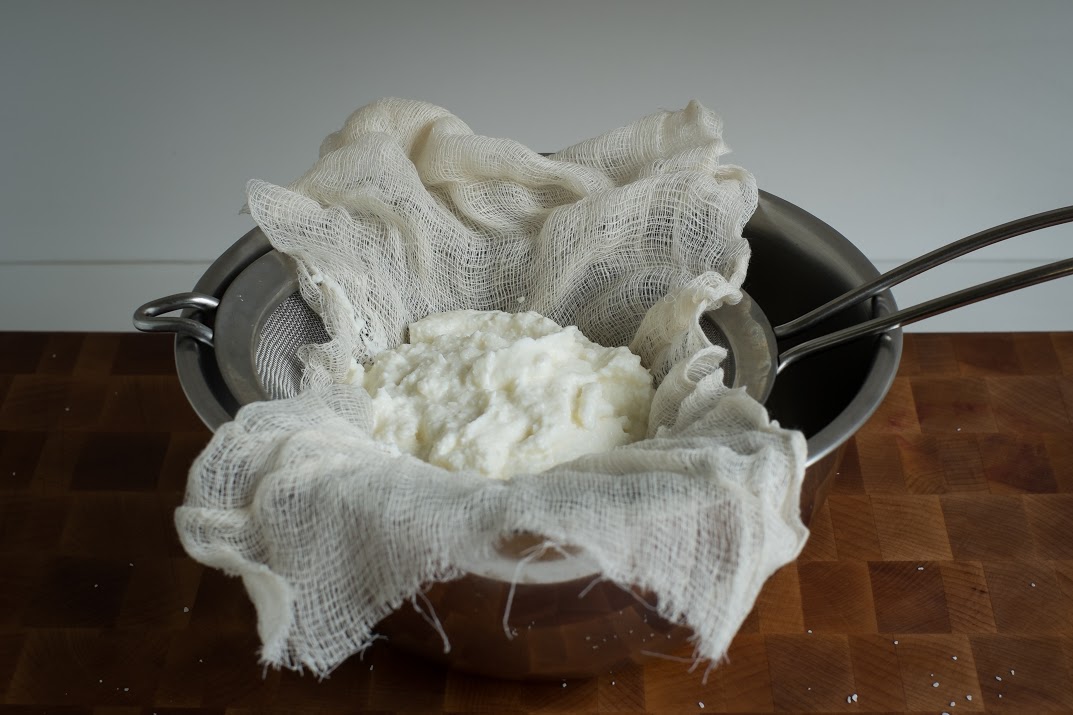
Line a fine mesh sieve with cheesecloth at least two layers thick and place this over a medium sized bowl. Generously sprinkle salt onto the cheesecloth and spoon the ricotta into the lined sieve. Add another sprinkle of salt on top of the cheese. Fold the edges of the cloth over the cheese and place the sieve-in-bowl setup into the fridge. 

The salt will draw water out of the ricotta. This process will take several days. Each day, check for liquid in the bowl and discard it. As you check on your cheese, you can sprinkle a small amount of more salt on to the cheese and under it (you can bring the corners of the cheesecloth up and squeeze to form a ball of cheese, peeling the cloth away gently to get under it to add salt). 

If you bought your ricotta it a plastic tub, hang onto it. Puncture it with a pair of very sharp kitchen shears all over the bottom and sides. We will use that later. If you don't have a tub, you can use a small plastic container you don't mind puncturing or you can use a ricotta mold like this one or you can carry on using the sieve as your mold if you don't mind being without it in the kitchen for a while.

When the cheese no longer weeps moisture visibly; you can transfer it to your prepared mold/ or holey tub. Gently remove it from the cheesecloth, place the cheesecloth into the mold, and generously cover the cloth with salt. Place the cheese onto the salted cloth and salt the top of the cheese. Cover it with the cheesecloth edges. Fill a mason jar with water and place this on top of the cheese. This weight will help to press water out the cheese further and aid the action of the salt.

Every day or two, look at the cheese, prod it to test for firmness, salt the edges and top. Once or twice a week, take the cheese in the cloth out of the tub, flip it over so the bottom is on top, salt all over and return to the tub with the weight on top. 

This process will take between a couple of weeks and a couple of months. The amount and type of salt, the moisture content of the cheese and the humidity will affect the process. 

The cheese is finished when it is very firm, similar to the texture of feta, though slightly drier. When this texture is achieved, rinse the salt off and dry the cheese off on a paper towel or clean tea towel. The cheese will be very salty at this stage; eating a slice will perhaps taste unappetizingly salty. I keep it this way and shred the cheese with a box grater or slice it extremely thin. The small size reduces the perceived saltiness. Alternately, if you want a milder cheese, you can soak the ricotta salata in water until it reaches the desired flavour, then dry again on paper towels. 

-large supply of fine, flaky salt, I like Diamond Crystal salt

In a small bowl, mix 2 tsp salt through the ricotta, taking care to distribute evenly. 

Line a fine mesh sieve with cheesecloth, at least two layers thick and place this over a medium sized bowl. Generously sprinkle salt onto the cheesecloth and spoon the ricotta into the lined sieve. Add another sprinkle of salt on top of the cheese. Fold the edges of the cloth over the cheese and place the sieve-in-bowl setup into the fridge. 

The salt will draw water out of the ricotta. This process will take several days. Each day, check for liquid in the bowl and discard it. As you check on your cheese, you can sprinkle a small amount of more salt on to the cheese and under it (you can bring the corners of the cheesecloth up and squeeze to form a ball of cheese, peeling the cloth away gently to get under it to add salt). 

If you bought your ricotta it a plastic tub, hang onto it. Puncture it with a pair of very sharp kitchen shears all over the bottom and sides. We will use that later. If you don't have a tub, you can use a small plastic container you don't mind puncturing or you can use a ricotta mold like this one or you can carry on using the sieve as your mold if you don't mind being without it in the kitchen for a while.

When the cheese no longer weeps moisture visibly; you can transfer it to your prepared mold/ or holey tub. Gently remove it from the cheesecloth, place the cheesecloth into the mold, and generously cover the cloth with salt. Place the cheese onto the salted cloth and salt the top of the cheese. Cover it with the cheesecloth edges. Fill a mason jar with water and place this on top of the cheese. This weight will help to press water out the cheese further and aid the action of the salt.

Every day or two, look at the cheese, prod it to test for firmness, salt the edges and top. Once or twice a week, take the cheese in the cloth out of the tub, flip it over so the bottom is on top, salt all over and return to the tub with the weight on top. Keep the cheese in the fridge throughout the process.

This process will take between a couple of weeks and a couple of months. The amount and type of salt, the moisture content of the cheese and the humidity will affect the process. 

The cheese is finished when it is very firm, similar to the texture of feta, though slightly drier. When this texture is achieved, rinse the salt off and dry the cheese off on a paper towel or clean tea towel. The cheese will be very salty at this stage; eating a slice will perhaps taste unappetizingly salty. I keep it this way and shred the cheese with a box grater or slice it extremely thin. The small size reduces the perceived saltiness. Alternately, if you want a milder cheese, you can soak the ricotta salata in water until it reaches the desired flavour, then dry again on paper towels. 

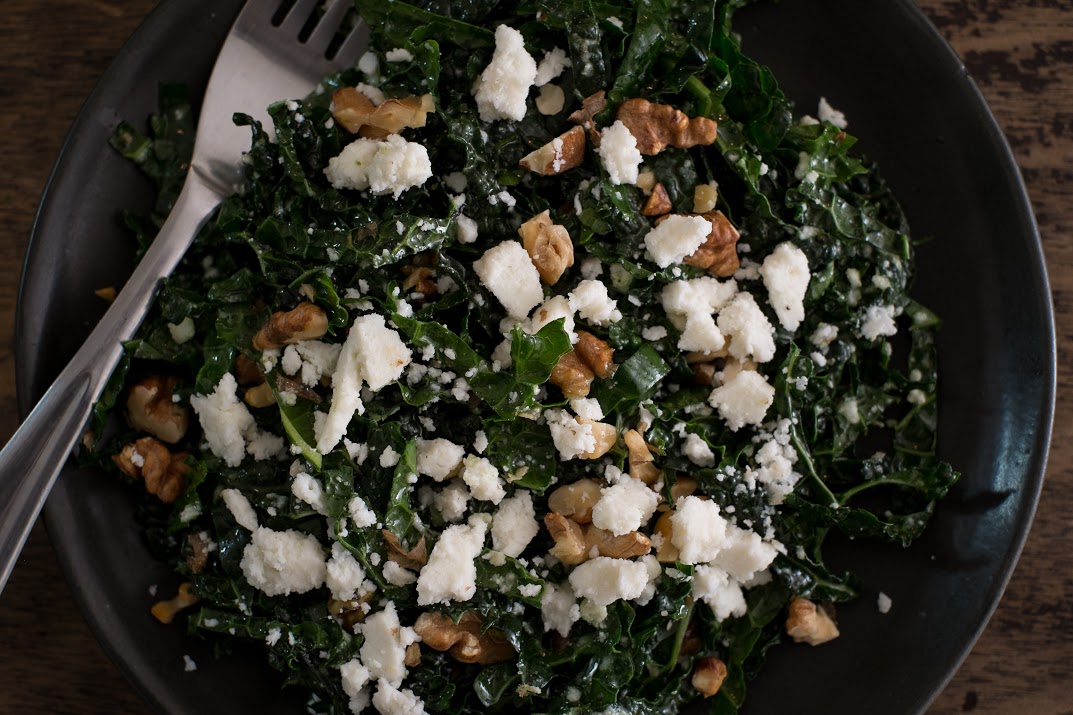
Crumble it over salads, pasta or thinly slice onto sandwiches. Take care when season foods with salt-this cheese is plenty salty! 

Tags ricotta, cheese, DIY
3 Comments

chard potstickers

September 21, 2014 Stephanie Inman

I have way too much chard right now, which is a nice problem to have I suppose, an abundance problem. I have been getting a lot in my CSA box and it's growing rampantly in the garden at the same time. My fridge is full of chard. I have been sautéeing a lot of chard, garlic and chilli and putting in on pasta, in frittatas, in tarts and generally tucking it into anywhere I can think of to use it up. 

I was very excited when I thought of putting in in these potstickers, because they seemed like a really tasty way to use a LOT of chard. And I was right-I put an intimidatingly large pile of greens into my frying pan and it reduced quickly into a fraction of the size. 

This recipe does make a lot of potstickers though; each dumpling only holds teeny spoonful of filling. We ate as many as we could for dinner and then I froze the rest (before cooking) for later. These make a great appetizer or party food-they can be made ahead of time and fried at the last minute. But with all those greens in them, I didn't even feel bad when I ate nothing but crispy, golden dumplings. It felt nearly virtuous. Nearly. 

spicy garlic paste:

  • one head of garlic, peeled

  • two thumb sized pieces of ginger, no need to peel them

  • 4-5 small fresh hot chillis, roughly chopped

  • a little oil to blend

Place everything in a food processor and blend until a smooth paste forms. Store extra paste in an airtight container in the freezer. 

spicy garlic dipping sauce:

  • 1/2 cup soy sauce

  • 1/2 tablespoon spicy garlic paste

  • 1 tbs maple syrup or honey

Stir soy, garlic paste and syrup together.

 chard potstickers: 

  • two large bunches chard (or spinach, kale or a combination-use whatever greens are particularly abundant)

  • one pound ground pork (I used half pork and half ground bison this time-diced shrimp with pork would be great too!)

  • 2 tablespoons spicy garlic paste

  • 2 tablespoons soy sauce

  • lard or oil for frying

  • 2 packets of store bought wonton wrappers.

Roughly chop the greens and fry them in a little fat over medium-high heat in a large frying pan until they are wilted and reduced in size. Allow to cool slightly. 

In a large bowl, mix ground pork, greens, garlic paste and soy sauce until evenly combined. 

Place about two teaspoons of filling onto each wrapper, lightly moisten one side and smooth the two sides together. Place wrappers on a parchment lined baking sheets while making the others. 

Fry the potstickers in a pan on medium-high heat in a generous quantity of fat (about 1/4 inch of fat in the pan) until deeply browned on each side.

Serve immediately, garnished with thin slices of green onions, fresh red chillis and spicy garlic dipping sauce. 

Photo credits: Tyrel Hiebert

In meat
2 Comments

summer's not over yet: corn, tomato and feta salad

September 11, 2014 Stephanie Inman

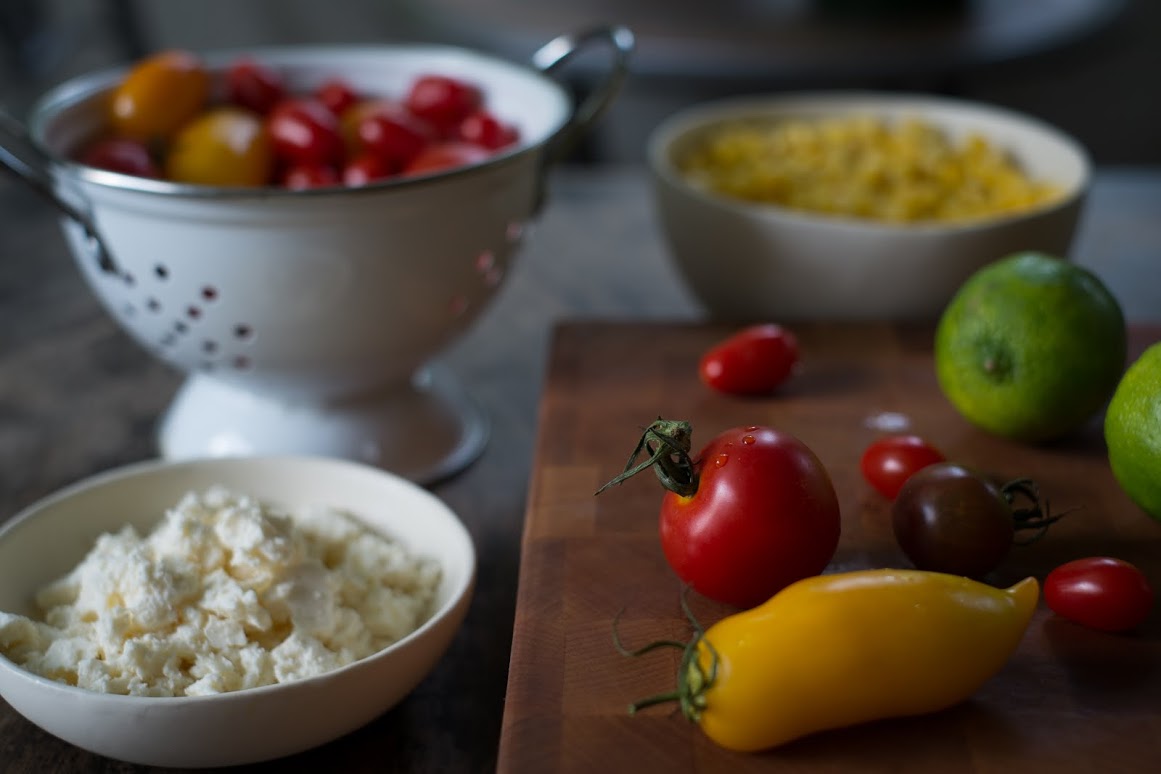
There are crispy leaves on the ground already, halloween costumes in shops and pumpkin spice everything everywhere. Many people might take that evidence, plus the fact that it is nearly the middle of September, and accept that Fall had arrived. But I refuse to believe that it is no longer summer. I am wearing summer clothes, doing summer things and eating summer foods. like my favorite salad right now, summer corn, tomato and feta salad with lime and cumin. 

This recipe is great with fresh picked corn, grilled and slightly charred on the barbecue, kernels scraped off the cob-but I tack towards laziness so quite often, I use a bag of frozen corn, which makes a really good salad too, and it is really easy to make. Tinned corn kernels work well too. 

DSCF3275.jpg

Whatever corn you use, do get the best tomatoes you can find; the intense flavour of summer tomatoes is amazing with sharp lime and salty feta. The tomato-corn-feta combination is simple and minimalistic like a caprese: bright acid, creamy cheese and sunny tomatoes. This salad is hearty and filling; a bit of grilled chicken or fish on the side makes this a fillmeal. If you have any leftovers, throw the salad on some fish tacos. 

corn, tomato and feta salad:

  • 4-5 ears of corn, barbecued, kernels scraped off, or 1 bag frozen corn kernels, thawed
  • 2 pints of small tomatoes, chopped in medium size pieces 
  • 1/2 cup crumbled feta
  • lime juice from 2-3 limes
  • a glug olive oil 
  • large pinch cumin
  • a bit of cayenne powder
  • generous salt and pepper 

Toss together tomatoes, corn and feta. Blend lime juice, olive oil, cumin, cayenne, salt and pepper to taste, and drizzle over the salad.

Eat salad, taste the summer and pretend it's never going to end. That's what I'll be doing.

DSCF3279.jpg

Photo credits: Tyrel Hiebert 

In Feta Tags Salad, Summer
Comment
← Newer Posts Older Posts →
Become a patron

Subscribe

Sign up to receive my monthly round up!

We respect your privacy.

Thank you!

Instagram

These bright and sunny cookies are stuffed full of tart lemon curd, and slightly vegetal from a good amount of basil pulsed into the sugar. The result is a chewy, herbaceous cookie that bursts with gooey lemon centres. Link in bio or here www.theverd
These bright and sunny cookies are stuffed full of tart lemon curd, and slightly vegetal from a good amount of basil pulsed into the sugar. The result is a chewy, herbaceous cookie that bursts with gooey lemon centres. Link in bio or here www.theverdigris.ca/blog/basil-lemon-curd-sugar-cookies * * * * * * * #cookies #lemon #basil #baking #kitchn #foodfluffer @foodblogfeed #foodblogfeed #instafood #thebakefeed #gloobyfood #hautescuisines #f52grams #huffposttaste #huffpostgram @feedfeed #feedfeed #foodphotography
From the archives: Crispy chocolate peanut butter squares: a candied, crispy puffed cereal base with layers of peanut butter and chocolate, all balanced with a good pinch of flaky salt. It’s like the best combination of a rice-crispy and a Reec
From the archives: Crispy chocolate peanut butter squares: a candied, crispy puffed cereal base with layers of peanut butter and chocolate, all balanced with a good pinch of flaky salt. It’s like the best combination of a rice-crispy and a Reece’s peanut butter cup. Search “the verdigris crispy peanut butter chocolate squares or use this link for the recipe: www.theverdigris.ca/blog/chocolate-peanut-butter-crispy-squares * * * * * * * #chocolate #peanutbutter #ricecrispy #kitchn #foodfluffer @foodblogfeed #foodblogfeed #instafood #thebakefeed #gloobyfood #hautescuisines #f52grams #huffposttaste #huffpostgram @feedfeed #feedfeed #foodphotography
Apricot and amaretti crumble - crisp, crumb topping softens on the bottom where it meets thick, gooey, sticky sweet-tart fruit. Crunchy, almond scented amaretti cookies spike through the crumb topping. Plus, fresh apricots look like the cutest little
Apricot and amaretti crumble - crisp, crumb topping softens on the bottom where it meets thick, gooey, sticky sweet-tart fruit. Crunchy, almond scented amaretti cookies spike through the crumb topping. Plus, fresh apricots look like the cutest little butts. Link in bio or here www.theverdigris.ca/blog/apricot-and-amaretti-crumble * * * * * * * #crumble #apricots #amaretti #baking #kitchn #foodfluffer @foodblogfeed #foodblogfeed #instafood #thebakefeed #gloobyfood #hautescuisines #f52grams #huffposttaste #huffpostgram @feedfeed #feedfeed #foodphotography
From the archives: A bit of a twist on a classic: these cookies have white chocolate, macadamia nuts and a little toasted coconut. I boosted the coconut flavour with a tiny bit of coconut extract, which you can leave out if you aren’t a fan. Wh
From the archives: A bit of a twist on a classic: these cookies have white chocolate, macadamia nuts and a little toasted coconut. I boosted the coconut flavour with a tiny bit of coconut extract, which you can leave out if you aren’t a fan. White chocolate can sometimes be way too sweet, so I also salted the tops of the cookies just a little, to round the sweetness. Also, I think it’s crucial to just slightly underbake them so they stay chewy and soft. Search for “the verdigris macadamia white chocolate coconut cookies” or use this link: https://www.theverdigris.ca/blog/macadamia-coconut-white-chocolate-cookies #cookies #macadamianuts #coconut #whitechocolate #kitchn #foodfluffer @foodblogfeed #foodblogfeed #instafood #thebakefeed #gloobyfood #hautescuisines #f52grams #huffposttaste #huffpostgram @feedfeed #feedfeed
These bright and sunny cookies are stuffed full of tart lemon curd, and slightly vegetal from a good amount of basil pulsed into the sugar. The result is a chewy, herbaceous cookie that bursts with gooey lemon centres. Link in bio or here www.theverd From the archives: Crispy chocolate peanut butter squares: a candied, crispy puffed cereal base with layers of peanut butter and chocolate, all balanced with a good pinch of flaky salt. It’s like the best combination of a rice-crispy and a Reec Apricot and amaretti crumble - crisp, crumb topping softens on the bottom where it meets thick, gooey, sticky sweet-tart fruit. Crunchy, almond scented amaretti cookies spike through the crumb topping. Plus, fresh apricots look like the cutest little From the archives: A bit of a twist on a classic: these cookies have white chocolate, macadamia nuts and a little toasted coconut. I boosted the coconut flavour with a tiny bit of coconut extract, which you can leave out if you aren’t a fan. Wh

Want to support the Verdigris? Become a patron!